
- 01Was Jack the Ripper Ever Caught?
- 02What Do We Actually Know?
- 03Why the Case Remains Unsolved
- 04Aaron Kosminski — The Leading Modern Suspect
- 05Montague John Druitt — The Suicide Theory
- 06Michael Ostrog — The Suspect Most Researchers Now Reject
- 07George Chapman — The Known Serial Killer
- 08Prince Albert Victor — The Royal Conspiracy
- 09The Macnaghten Memorandum
- 10Why the Identity May Never Be Proven
- 11Final London Insiders Tip
Jack the Ripper was never identified. Between August and November 1888, five women were murdered in Whitechapel and Spitalfields in what became known as the Whitechapel murders. It was a case that hit Victorian London like a shockwave. Newspapers fuelled panic, vigilante patrols formed, and the Metropolitan Police faced pressure on a scale they had never experienced. This guide breaks down the leading theories, the most discussed suspects, and what modern researchers actually believe today. If you want the killings in order first, start with the Jack the Ripper Timeline: The 1888 Whitechapel Murders.
Was Jack the Ripper Ever Caught?
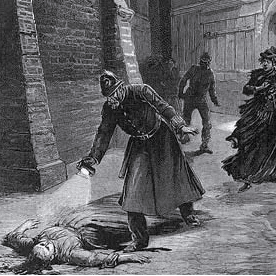
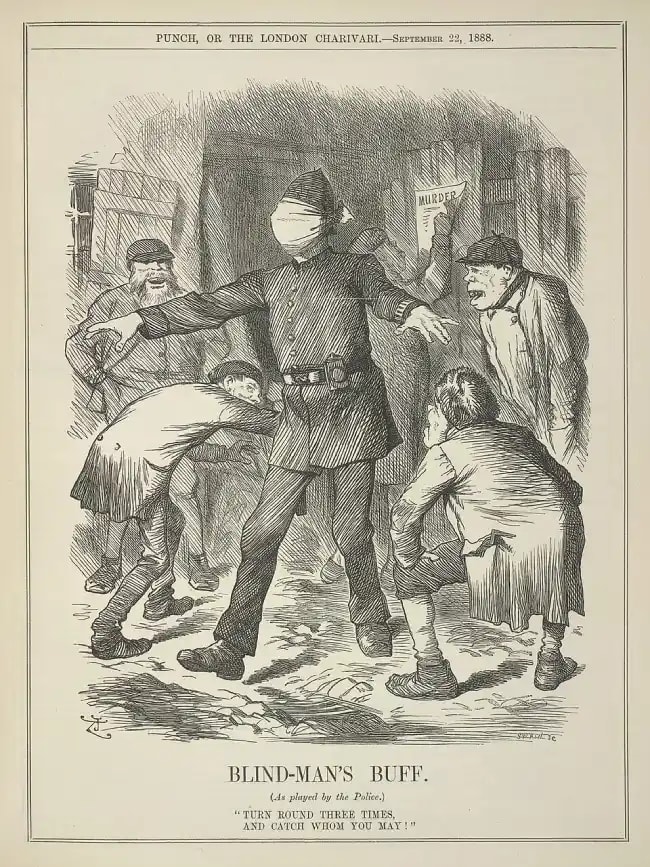
No. Jack the Ripper was never arrested, never tried, and never identified. The police investigation was enormous by nineteenth-century standards. Thousands of people were questioned, hundreds were investigated, and dozens were detained. But none were charged and the murders faded from the front pages without a resolution. That is the uncomfortable truth at the heart of this case.
What Do We Actually Know?
Before looking at suspects, it helps to separate what we know from what we think. From the canonical five murders, most historians agree the killer operated in Whitechapel between 31 August and 9 November 1888, targeted women living in extreme poverty, killed in the early hours of the morning, cut throats first then mutilated, escalated in severity across the series, and knew the geography of Whitechapel well enough to vanish quickly. What we do not know: his real name, his occupation, whether he acted alone, or why the murders stopped. Everything else is interpretation.
Why the Case Remains Unsolved
In 1888, crime scene work was basic. There were no fingerprints in everyday police use, no DNA, no CCTV, no modern understanding of how to preserve evidence. Crowds gathered immediately at murder sites and officers had to balance investigation with crowd control. Physical evidence was easily contaminated or lost.
Then there is the environment. Whitechapel was densely populated, noisy, chaotic, and poorly lit at night. Many people worked late hours, many slept in common lodging houses, and people moved constantly. Witnesses could give honest statements that still conflicted, because visibility was poor and the streets were busy even at strange hours. The infamous letters signed "Jack the Ripper" made the story bigger, but many researchers believe most were hoaxes or press-driven sensationalism. Put simply: Victorian policing was trying to solve a modern-style serial murder case without modern tools, inside one of the most difficult urban environments in London.
Aaron Kosminski — The Leading Modern Suspect
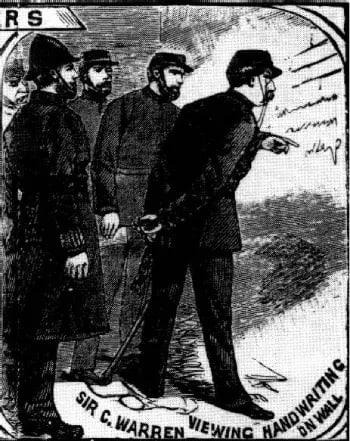
If you ask who was the real Jack the Ripper, Aaron Kosminski is one of the first names that comes up — mainly because senior police officials referenced him and because of later DNA claims. Kosminski was a Polish Jewish immigrant who lived and worked in Whitechapel as a hairdresser. By 1890 he was showing severe signs of mental illness. He was admitted to Mile End Workhouse, then transferred to Colney Hatch Lunatic Asylum in 1891, where he remained until his death in 1919. Asylum records describe paranoia, hallucinations, refusal to wash, and delusions.
Three senior figures kept his name in police thinking. Sir Robert Anderson later claimed the killer was identified by a witness but not prosecuted. Chief Inspector Donald Swanson wrote marginal notes naming "Kosminski" as the suspect Anderson meant. Sir Melville Macnaghten included a "Kosminski" in his list of prime suspects in 1894 — suggesting Kosminski was not a random later invention but existed in police thinking close to the era of the murders.
A modern claim links Kosminski to a shawl said to come from the Catherine Eddowes case. Mitochondrial DNA testing was presented as a match to maternal-line descendants. The controversy is twofold: mitochondrial DNA cannot uniquely identify one person, and the provenance of the shawl is disputed, with concerns about contamination over the decades. Kosminski remains a strong "named in police sources" suspect, but not a solved case. There is no proven moment placing him at a murder scene, no confession, and no verified physical evidence chain.
Montague John Druitt — The Suicide Theory
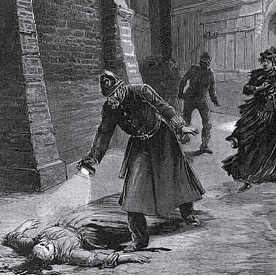
Druitt is often described as the most "Victorian" suspect: respectable on the surface, then a sudden death, and the murders stop shortly after. Montague John Druitt was a 31-year-old barrister and assistant schoolmaster. He came from a respectable family, but mental illness existed in his family history. In late 1888 he was dismissed from his teaching role. His body was found in the Thames — the likely conclusion is suicide. The strongest reason he was suspected is timing: Mary Jane Kelly was murdered on 9 November 1888, Druitt died weeks later, and the canonical murders ended. In the Macnaghten Memorandum, Druitt is positioned as a serious suspect.
However, Macnaghten made errors about Druitt, including his occupation. More importantly, Druitt appears to have continued working after the final murder. That does not rule him out, but it weakens the "he snapped then immediately stopped" narrative. Many researchers keep Druitt on the list because he is in official police-era documents, but the case against him is mostly circumstantial.
Michael Ostrog — The Suspect Most Researchers Now Reject
Ostrog is the third name in the Macnaghten Memorandum, but modern research has largely cooled interest in him. Michael Ostrog was a Russian-born career criminal who used multiple aliases and was considered unstable. He sometimes impersonated professionals and reportedly carried surgical instruments — in a case where mutilation raised questions of anatomical skill, that detail drew attention. Later researchers argue that prison records likely place Ostrog outside London during the key period, with some evidence suggesting he was incarcerated in France. Today, he is best understood as "a name that made it into an official memo" rather than a suspect with strong supporting evidence.
George Chapman — The Known Serial Killer
Chapman is one of the most tempting suspects because he was a confirmed murderer who lived in the area. Born Severin Kłosowski in Poland, Chapman moved to London and worked as a barber in the East End. He later poisoned three women he lived with and was executed in 1903. He lived in or near Whitechapel, had some medical knowledge, and killed women. There is also a famous claim that an investigating officer reacted strongly at Chapman's arrest. The main problem is method: Chapman's confirmed murders were slow poisonings over time, while the Ripper killings were sudden outdoor attacks with mutilation. Most criminologists are sceptical that a serial killer would switch methods that dramatically.
Prince Albert Victor — The Royal Conspiracy
This theory refuses to die, but it is not taken seriously by most historians. It claims Prince Albert Victor, Queen Victoria's grandson, was involved in the murders, or that a royal physician killed to protect the monarchy. Variants add secret marriages, secret children, and elaborate cover-ups. It is a perfect story: royals, scandal, power, secrecy, Victorian London at night. But there is no credible evidence placing Prince Albert Victor at the scenes, and there are strong timeline issues with his whereabouts. If your goal is historical accuracy, treat this as pop culture rather than a serious answer to who was Jack the Ripper.
The Macnaghten Memorandum
If there is one document that has shaped modern discussion, it is the Macnaghten Memorandum. Sir Melville Macnaghten wrote it in 1894, several years after the murders. He had access to the Metropolitan Police files and spoke with officers involved. In the memorandum, Macnaghten named three prime suspects: Montague John Druitt, Aaron Kosminski, and Michael Ostrog. What matters is not that Macnaghten "solved" the case — he didn't. What matters is that this memo gives us a rare window into who senior officials privately considered credible after the investigation ended.
Why the Identity May Never Be Proven
A legal "solution" is impossible. There will be no trial, no cross-examination, no conviction. What we can do is historical judgement: weighing documents, timelines, credibility, and plausibility. Modern techniques can help, but only if the evidence chain is reliable. In this case, many artefacts are disputed, many sources are second-hand, and the original investigation happened in an era when evidence handling was not built for future forensic testing. That is why the question "who was Jack the Ripper?" keeps producing theories rather than certainty.
Final London Insiders Tip
The Ripper case is not just a "guess the killer" mystery. It is Victorian Whitechapel, poverty, media pressure, limited policing tools, and the uncomfortable gap between suspicion and proof. The suspects matter, but the environment is what makes the case make sense. If you want the story in the place it happened, our Jack the Ripper Free Walking Tour brings the theories, evidence, and streets together in a way no documentary can.
Jack the Ripper was never identified. The most discussed suspects include Aaron Kosminski and Montague John Druitt, but no conclusive evidence proves who the killer was.
No. The Metropolitan Police never arrested or charged anyone for the Whitechapel murders of 1888.
Aaron Kosminski is often seen as one of the strongest suspects because he was named in police-era documents and later linked to disputed DNA claims. However, the evidence remains circumstantial.
The Macnaghten Memorandum is a confidential 1894 police document naming three prime suspects: Druitt, Kosminski, and Ostrog. It is one of the most important sources for understanding how senior police officials viewed the case after 1888.
No one knows. Theories include death, imprisonment, institutionalisation, or relocation. There is no confirmed explanation.
No. DNA claims exist, especially related to Aaron Kosminski, but they are heavily disputed due to questions about artefact provenance, contamination, and the limits of mitochondrial DNA testing.


