
- 01Before You Start: What to Know About This Walk
- How long is the Jack the Ripper walking route?
- When is the best time to do this walk?
- Where does the walk start and finish?
- Is this walk suitable for everyone?
- 02Stop 1: Durward Street (formerly Buck's Row) — Mary Ann Nichols
- What happened here
- What you will see today
- 03Stop 2: Henriques Street (formerly Berner Street) — Elizabeth Stride
- What happened here
- What you will see today
- 04Stop 3: Mitre Square — Catherine Eddowes
- What happened here
- What you will see today
- 05Stop 4: Hanbury Street — Annie Chapman
- What happened here
- What you will see today
- 06Stop 5: Miller's Court, Dorset Street — Mary Jane Kelly
- What happened here
- What you will see today
- 07What This Walking Route Reveals
- 08Final London Insiders Tip
Few walks in London carry the weight of this one. Today the streets of Whitechapel look like any other part of the city — busy roads, market traders, cafés and modern apartment blocks. But the geography has changed far less than you might expect. The distances between locations are short. The turning points are still there. And once you understand what happened here in 1888, the entire area begins to feel different.
This Jack the Ripper walking route takes you through all five canonical murder sites across roughly 1.5 miles of east London. Instead of following the murders strictly in chronological order, the route has been designed to make sense on foot — a natural, continuous walk through Whitechapel without doubling back. If you want to follow the murders exactly as they unfolded, our Jack the Ripper Timeline lays out the full sequence. And if you'd rather experience these streets with a guide, our Jack the Ripper Free Walking Tour covers the same locations with full storytelling and historical context.
Before You Start: What to Know About This Walk
How long is the Jack the Ripper walking route?
The full route covers roughly 1.5 miles through Whitechapel and Spitalfields. Walking at a relaxed pace, most people complete it in about 90 minutes. If you want time to stop at each location and absorb the atmosphere, allow closer to two hours.
When is the best time to do this walk?
You can follow this route at any time of day. During daylight hours the locations are easier to orient yourself around. But walking in the evening — particularly in autumn or winter — creates a much stronger sense of the environment in which the crimes occurred. The light fades early, the streets quieten, and the atmosphere becomes noticeably closer to what these streets may have felt like in Victorian Whitechapel.
Where does the walk start and finish?
The walk begins near Whitechapel Underground Station and ends at the Ten Bells pub on Commercial Street, Spitalfields. This historic pub remains one of the most atmospheric surviving locations connected to the case and makes a natural final stop. Both the start and finish are well connected via the District and Hammersmith & City lines.
Is this walk suitable for everyone?
Yes. The entire route follows normal paved streets and pavements with no steep gradients. Navigation is simple using a phone map, and each stop includes clear directions to the next.
Stop 1: Durward Street (formerly Buck's Row) — Mary Ann Nichols
From Whitechapel Underground Station, walk west along Whitechapel Road before turning onto Durward Street. The journey takes around five minutes.
What happened here
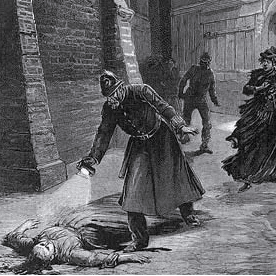
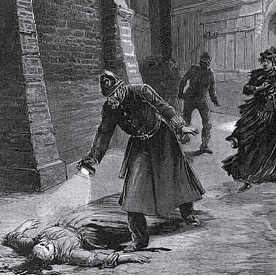
In 1888 this street was known as Buck's Row, a narrow and poorly lit residential street. At approximately 3:40am on 31 August 1888, a carman named Charles Cross was walking to work when he noticed a shape lying on the pavement near the Board School wall. It was the body of Mary Ann Nichols, known to friends as Polly.
Nichols was 43 years old. Earlier that night she had been turned away from a lodging house on Thrawl Street because she lacked the fourpence required for a bed. Her murder is widely recognised as the first of the canonical five Jack the Ripper victims, marking the beginning of the Whitechapel murders. The brutality of the attack immediately suggested something unusual — this did not resemble a typical street assault. For the full story of Polly Nichols and the other women, see our Jack the Ripper Victims guide.
What you will see today
Buck's Row was renamed Durward Street in the years following the murders, partly to distance the area from its notoriety. The Victorian housing has long disappeared. Today the street contains later residential buildings and the rear wall of what was once the Board School — one of the few structures that still connects visually to the original setting. It is a quiet and fairly ordinary street. As the opening stop on this walk, that is exactly the point. This is what Whitechapel looked like at night in 1888: dark, quiet and easy to move through unnoticed.
From Durward Street head south toward Whitechapel Road, then continue south and east toward Henriques Street in Stepney. The walk takes around twelve to fifteen minutes.
Stop 2: Henriques Street (formerly Berner Street) — Elizabeth Stride
What happened here
Elizabeth Stride was the first victim of what historians call the Double Event — two murders committed on the same night, less than a mile apart and roughly 45 minutes between them. Stride, known as Long Liz, was 44 years old and had been born in Sweden before making her life in London. On the night of 30 September 1888 her body was discovered at around 1:00am in Dutfield's Yard, a narrow passage beside the International Working Men's Educational Club on what was then Berner Street. The man who found her, Louis Diemschutz, was returning by cart from a market. His horse shied unexpectedly at the entrance to the yard. When he struck a match to see what had startled the animal, he found Stride's body.
Unlike the other canonical victims, Stride's injuries were limited to a single deep cut to the throat. There were no abdominal mutilations. The prevailing theory is that Diemschutz's arrival interrupted the killer before he could continue — which may explain why a second murder followed less than an hour later.
What you will see today
Berner Street was renamed Henriques Street in the twentieth century. The yard where Stride was found no longer exists in its original form. The street today is quiet and largely residential. Standing here, consider the timing: Stride died at around 1:00am. Your next stop, Mitre Square, is less than a mile west. Catherine Eddowes died there at approximately 1:45am. You are about to walk the same distance the killer covered that night.
Head west along Commercial Road and into Aldgate, then follow the signs toward Mitre Square. The walk takes around fifteen minutes and crosses from the East End into the City of London.
Stop 3: Mitre Square — Catherine Eddowes
What happened here
Mitre Square is where the Double Event reached its most disturbing point. Catherine Eddowes was 46 years old. She had spent part of that evening in police custody — arrested for drunkenness and held at Bishopsgate Police Station before being released at around 1:00am. She was last heard saying she was heading home. She never arrived.
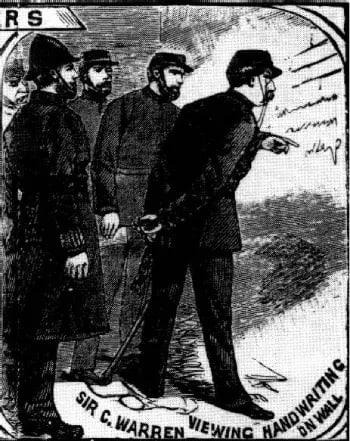
At 1:30am, PC Edward Watkins patrolled Mitre Square and found nothing unusual. When he returned at 1:45am, Eddowes' body lay in the south-west corner of the square. The injuries were the most extensive seen so far in the investigation. Her throat had been cut, her abdomen opened and organs removed. A piece of her apron had been cut away and was later discovered in a doorway on Goulston Street beneath a chalked message. Fearing it would inflame anti-Semitic tensions in the already fractious East End, police ordered the writing erased before dawn — a decision that Ripper scholars still debate today.
Mitre Square sat within the jurisdiction of the City of London Police rather than the Metropolitan Police, which created immediate coordination problems between the two forces.
What you will see today
Mitre Square still exists and still carries its name. It is a quiet courtyard surrounded by modern office buildings, accessed through narrow passages from Mitre Street and King Street. The atmosphere here is noticeably different from the rest of the route — enclosed, still and cut off from the noise of Aldgate. A small paved marker in the south-west corner acknowledges the historical significance of the site.
Head north from Mitre Square back through Aldgate and up toward Spitalfields. Hanbury Street is approximately fifteen minutes' walk north.
Stop 4: Hanbury Street — Annie Chapman
What happened here
Annie Chapman was 47 years old when she became the second canonical victim chronologically — though on this route she is your fourth stop. She was murdered on the morning of 8 September 1888, more than three weeks before the Double Event. Her body was found at around 6:00am in the backyard of 29 Hanbury Street, accessible from the street through a shared door and surrounded by rooms where families and lodgers were sleeping. Witnesses reported seeing Chapman speaking with a man near the entrance at around 5:30am. Her body was discovered less than thirty minutes later.
The injuries were more extensive than those inflicted on Mary Ann Nichols. It was after Chapman's murder that the press began to recognise a clear pattern — and fear across the East End intensified dramatically. Letters signed "Jack the Ripper" began reaching newspapers in the weeks that followed, turning a local horror into an international obsession.
What you will see today
The original building at 29 Hanbury Street no longer stands. The site is now part of the Old Truman Brewery complex, converted into market space, studios and event venues. Standing on Hanbury Street it is easy to forget how densely packed this area was in 1888. Families lived in every room. Yards were shared by dozens of residents. That a murder could take place here, feet from sleeping people, tells you a great deal about the overcrowding of Victorian Whitechapel.
From Hanbury Street head west and then north onto Commercial Street. Miller's Court was just off Dorset Street, which no longer exists — the area is now behind Spitalfields Market, close to White's Row. The Ten Bells pub on Commercial Street marks your finishing point. The walk takes around five to eight minutes.
Stop 5: Miller's Court, Dorset Street — Mary Jane Kelly
What happened here
Mary Jane Kelly was the youngest of the canonical five victims, believed to be around 25 years old, and the only one murdered indoors. Kelly rented a small single room at 13 Miller's Court, a narrow passage just off Dorset Street in Spitalfields. On the morning of 9 November 1888, her landlord sent an assistant named Thomas Bowyer to collect overdue rent. Receiving no answer at the door, Bowyer looked through a broken window pane and alerted police immediately.
Because Kelly was killed inside her own room, the killer had time he had never had during the outdoor murders. The injuries were the most severe of the entire series. After Kelly's murder, the killings stopped. No further murders matching the same pattern occurred. Whether the killer died, was imprisoned, was institutionalised or simply ceased killing has never been satisfactorily explained.
What you will see today
Dorset Street no longer exists under that name. The street was demolished and absorbed into the area now behind Spitalfields Market. Miller's Court itself is gone entirely. What survives is the Ten Bells pub on Commercial Street, where Kelly was last seen alive on the evening of 8 November 1888. It still stands, still trades and remains one of the most direct physical connections to the story anywhere in east London. It is the natural place to end this walk — and if the weather calls for it, the natural place to sit with a drink and let everything you have just seen settle.

What This Walking Route Reveals
Walking the Jack the Ripper route does something that reading cannot fully replicate. The distances between stops are genuinely short. The entire walk covers little more than a mile and a half. Standing at each location and looking toward the next, you begin to understand the geography that shaped the investigation. This was not a sprawling, unknowable city. It was a dense, tightly packed neighbourhood where streets, yards and passages ran into each other in ways that made movement both fast and invisible.
The Double Event is the moment this becomes most vivid. Walking from Henriques Street to Mitre Square — the same journey the killer likely made on the night of 30 September 1888 — takes around fifteen minutes on foot. Two murders. Less than a mile. Forty-five minutes. When you cover that ground yourself, the confidence and local knowledge required becomes uncomfortably clear.

Final London Insiders Tip
This walk is not a ghost tour or a piece of theatre. It is a walk through real streets where real events took place, involving real people whose lives were shaped by poverty, instability and the brutal conditions of Victorian Whitechapel. Read about the victims before you go — our Jack the Ripper Victims guide is the best place to start. When you reach each location, try to set aside the mythology and think about what it would have actually felt like to live and survive in these streets in 1888.
The route is approximately 1.5 miles and takes around 90 minutes at a relaxed pace. If you stop at each location to read and absorb the history, allow closer to two hours.
The walk starts near Whitechapel Underground Station on the District and Hammersmith and City lines, making it easy to reach from most parts of central London.
No — this route is optimised geographically for the most logical walk rather than strict chronological order. The murders are visited in the sequence: Nichols, Stride, Eddowes, Chapman, Kelly. For the murders in chronological order, see the Jack the Ripper Timeline.
Yes. The route passes through busy, well-populated areas of east London. Daytime is perfectly comfortable. An evening walk is equally safe, though many visitors find the atmosphere more evocative after dark.
Some do and some do not. Durward Street and Mitre Square still exist, with Mitre Square retaining much of its original layout. Miller's Court and the original building at 29 Hanbury Street have been demolished and redeveloped. The Ten Bells pub on Commercial Street, connected to Mary Jane Kelly, still stands.
Yes. Our Jack the Ripper Free Walking Tour covers the same locations with a local guide and runs regularly throughout the week.


