
- 01Why the Jack the Ripper Victims Still Matter
- 02Mary Ann Nichols — "Polly"
- 03Annie Chapman — "Dark Annie"
- 04Elizabeth Stride — "Long Liz"
- 05Catherine Eddowes — "Kate"
- 06Mary Jane Kelly — The Youngest of the Five
- 07What the Jack the Ripper Victims Had in Common
- 08Misconceptions About the Victims
- 09Final London Insiders Tip
The Jack the Ripper victims are often remembered only for how they died. Mary Ann Nichols. Annie Chapman. Elizabeth Stride. Catherine Eddowes. Mary Jane Kelly. These five women are known as the canonical Jack the Ripper victims — the murders most likely committed by the same killer. But they were far more than figures in a Victorian murder mystery. They were daughters, mothers, partners and friends. They lived complicated lives shaped by poverty, unstable work and the harsh realities of Whitechapel in 1888. Long before their deaths became international headlines, they were simply women trying to survive in one of the most difficult neighbourhoods in nineteenth-century Britain.
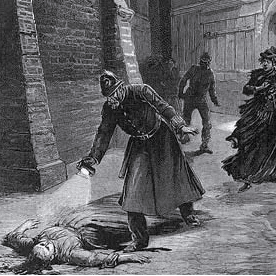
Understanding the Jack the Ripper victims means looking beyond the crimes themselves. Their lives reveal the social conditions of the East End in 1888 — overcrowded lodging houses, unstable employment and limited opportunities for working-class women. Our guide to Whitechapel in Victorian London explains the environment that shaped their lives, while our Jack the Ripper Free Walking Tour visits many of the streets connected to their stories.
Why the Jack the Ripper Victims Still Matter
For more than a century the story of the Whitechapel murders has been told as a hunt for the killer. That attention has often pushed the victims into the background of their own story. Yet their lives tell us far more about Victorian London than the killer ever could. Each of these women had been pushed to the margins of society by poverty, illness, family breakdown or unstable work. Their experiences reveal the fragile existence faced by thousands of people living in the East End during the late nineteenth century. Looking closely at their lives shifts the focus away from sensational crime and toward the social realities of Whitechapel — a crowded district where survival often depended on finding fourpence for a bed each night.
Mary Ann Nichols — "Polly"
Mary Ann Nichols, known to friends as Polly, was 43 years old when she became the first of the canonical Jack the Ripper victims on 31 August 1888. Polly was born Mary Ann Walker in London in 1845. At the age of eighteen she married William Nichols, a printer's machinist, and for many years their life appeared stable. The couple had five children and moved between working-class neighbourhoods while William maintained regular employment.
By the late 1870s the marriage had deteriorated. Financial pressure, alcohol dependency and personal conflict eventually led to separation in 1880. From that point Polly struggled to rebuild a secure life, moving between workhouses, temporary domestic work and common lodging houses. On the night of 30 August 1888, she attempted to secure a bed at a lodging house on Thrawl Street but was turned away because she lacked the fourpence required. She told a friend she would soon earn the money and return. Instead, at around 3:40am, her body was discovered on Buck's Row, now Durward Street.

Annie Chapman — "Dark Annie"
Annie Chapman was 47 when she became the second of the Jack the Ripper victims, murdered on 8 September 1888. Annie was born Eliza Ann Smith in 1841 and married coachman John Chapman in 1869. For several years the couple lived a relatively stable life in Windsor and had three children together. Two of their children died young, and Annie began suffering serious health problems. The marriage eventually collapsed, though John continued sending a weekly allowance of ten shillings. When he died in 1886, that financial support disappeared entirely.
By the late 1880s Annie had moved to Whitechapel, where she relied on small craft work such as crocheting flowers and selling matches. Like many women in the East End, she occasionally resorted to prostitution when work was scarce. The nightly cost of a lodging house bed meant that finding even a few pence could determine whether someone slept indoors or on the streets. Annie Chapman was discovered in the backyard of 29 Hanbury Street, a location still visited today on walking tours of the area.

Elizabeth Stride — "Long Liz"
Elizabeth Stride was 45 when she became one of the Jack the Ripper victims during the Double Event on 30 September 1888. Elizabeth was born Elisabeth Gustafsdotter in Sweden in 1843. After a difficult early adulthood that included social stigma following an unmarried pregnancy, she left Sweden and travelled to London in 1866. Three years later she married John Thomas Stride at St Giles Church in Camberwell. For a time the couple ran a coffee shop together, but the relationship eventually broke down and they separated in 1881.
Like many migrants trying to survive in Victorian London, Elizabeth occasionally reinvented her past. She told acquaintances that her husband and child had died in a shipwreck on the Thames — a story that was not true but helped explain her circumstances. Such shifting identities were not unusual among the poor of the East End, where reinvention could help someone find sympathy, work or financial assistance. When her body was discovered in Dutfield's Yard shortly after 1:00am, her throat had been cut but there were no further mutilations. Many historians believe the killer was interrupted before continuing, which may explain why another murder followed less than an hour later.
Catherine Eddowes — "Kate"
Catherine Eddowes was 46 when she became the fourth of the Jack the Ripper victims, murdered less than an hour after Elizabeth Stride. Catherine was born in Wolverhampton in 1842 and moved to London as a child. Both of her parents died when she was still young. She spent many years with her partner Thomas Conway, with whom she had three children. Together they travelled around England selling chapbooks and popular ballads — a precarious but common form of street trade. Following the breakdown of that relationship, Catherine eventually settled in Whitechapel and formed a relationship with a man named John Kelly. Friends described her as cheerful and sociable, often singing in pubs despite the hardships of her life.
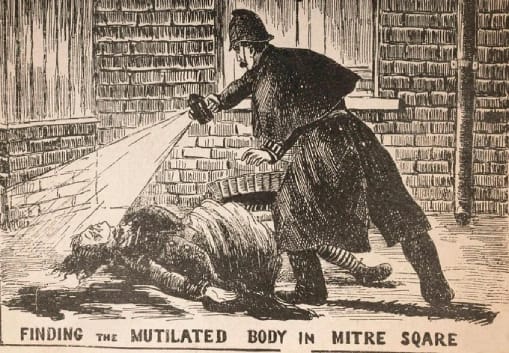
On the evening of 29 September 1888, Catherine was arrested for drunkenness and taken to Bishopsgate Police Station. She was released just after 1:00am. At approximately 1:45am her body was discovered in Mitre Square, within the City of London police jurisdiction — creating one of the most chilling moments in the entire investigation.
Mary Jane Kelly — The Youngest of the Five
Mary Jane Kelly, believed to be around 25 years old, was the youngest and most mysterious of the Jack the Ripper victims. Much of Mary Jane's early life remains uncertain. Most details come from stories she told her partner Joseph Barnett, which historians cannot fully verify. According to Barnett, she claimed to have been born in Limerick, Ireland, before moving to Wales as a child. Whether these details were true remains unclear, but they reflect the fluid identities common among migrants and working-class communities in Victorian London.
By the mid-1880s Mary Jane had moved to London and eventually settled in Spitalfields with Joseph Barnett, renting a small single room at 13 Miller's Court, just off Dorset Street. Their relationship deteriorated shortly before her death, partly because Mary Jane allowed other struggling women to sleep in the room during cold nights. She was last seen alive on the evening of 8 November 1888 at the Ten Bells pub on Commercial Street, which still stands today. Unlike the other Jack the Ripper victims, she was murdered inside her own room. The privacy of the space gave the killer far more time than in previous attacks, leading to the most extensive mutilations of the entire series.

What the Jack the Ripper Victims Had in Common
Although the five Jack the Ripper victims came from different backgrounds, several common circumstances connected their lives. All were living in extreme poverty in Whitechapel. Most relied on casual work and frequently stayed in common lodging houses where beds were rented nightly. Alcohol dependency affected several of them, and each woman experienced some form of family breakdown or social isolation. Yet they were not identical figures. Each had a different story, different personality and different path that eventually led them to the same streets of the East End.
Misconceptions About the Victims
One of the most persistent myths surrounding the Jack the Ripper victims is that all five women were prostitutes. Modern historical research challenges this assumption. While prostitution was common in Whitechapel and some women occasionally exchanged sex for money, there is little clear evidence that all five women worked as professional sex workers. The label largely originated from sensational Victorian newspapers and has been repeated for generations. What is clear is that all five women were vulnerable, living within a neighbourhood already struggling with poverty and crime.
Final London Insiders Tip
Many of the places connected to the Jack the Ripper victims still exist today. Durward Street, Hanbury Street, Mitre Square and the former site of Dorset Street are all within a small area of London's East End. Walking between them reveals just how close these locations are — and how easily someone familiar with the maze of narrow streets could disappear into the darkness of Whitechapel. The real story begins with five women whose lives were shaped by poverty, resilience and the harsh realities of Victorian Whitechapel. Our Jack the Ripper Free Walking Tour explores the locations, the investigation and — most importantly — the stories of the victims themselves.
The Jack the Ripper victims were five women murdered in Whitechapel, London, in 1888. They are known as the canonical five: Mary Ann Nichols, Annie Chapman, Elizabeth Stride, Catherine Eddowes and Mary Jane Kelly.
Most historians recognise five canonical Jack the Ripper victims. These murders occurred between 31 August and 9 November 1888 in the Whitechapel area of London's East End.
No. Although some of the victims may have occasionally exchanged sex for money to survive, there is no solid evidence that all five women were professional prostitutes. This assumption largely came from sensational Victorian newspapers.
The victims ranged in age from approximately 25 to 47 years old. Mary Jane Kelly was the youngest, while Annie Chapman was the oldest of the five canonical victims.
Mary Ann Nichols and Annie Chapman were buried in pauper's graves. Elizabeth Stride is buried in East London Cemetery, Catherine Eddowes in the City of London Cemetery, and Mary Jane Kelly in St Patrick's Cemetery in Leytonstone.


