
- 01What are the Houses of Parliament?
- House of Commons
- House of Lords
- What about the royals?
- 02Early History of the Palace of Westminster
- 03How Westminster Shifted from Royal Home to Political Centre
- 04The Great Fire of 1834
- 05Why the Houses of Parliament Look the Way They Do
- 06Big Ben vs Elizabeth Tower
- 07Westminster Hall: the Oldest Part of Parliament
- 08How to Visit the Houses of Parliament
- 09The Houses of Parliament and Westminster
The Houses of Parliament are one of London's most recognisable landmarks and the centre of British political life. Sitting on the River Thames in Westminster, the building is where laws are debated, governments are challenged, and some of the biggest moments in modern British history play out.
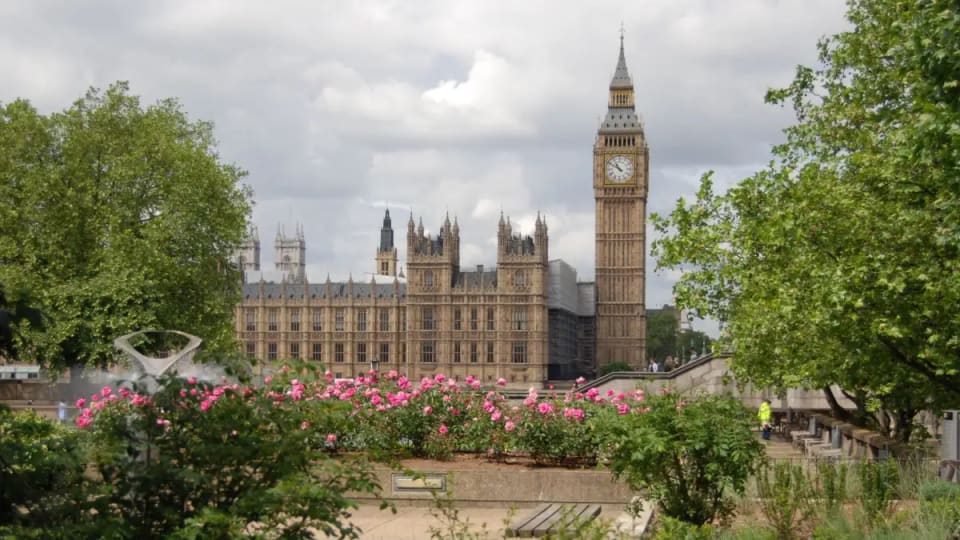
This guide covers how the Palace of Westminster began as a royal residence, how it became the home of Parliament, what survived the Great Fire of 1834, and the story behind Big Ben and the Elizabeth Tower. We also share practical tips for visiting, including how to watch debates for free.
What are the Houses of Parliament?
The Houses of Parliament is the everyday name for the Palace of Westminster, where the UK's two parliamentary chambers meet: the House of Commons and the House of Lords.
House of Commons
The elected chamber. MPs represent constituencies across the UK, debate laws, and question the government. Prime Minister's Questions takes place in the Commons.
House of Lords
The Lords is not elected. It is made up of appointed members known as peers, including experts from different fields, public figures, and senior legal and religious figures. The Lords reviews proposed laws, suggests changes, and acts as a second layer of scrutiny.
What about the royals?
The monarch still has a ceremonial role, most famously at the State Opening of Parliament, but the royal family does not control political decision-making. Power sits with elected representatives and the democratic process.
Early History of the Palace of Westminster
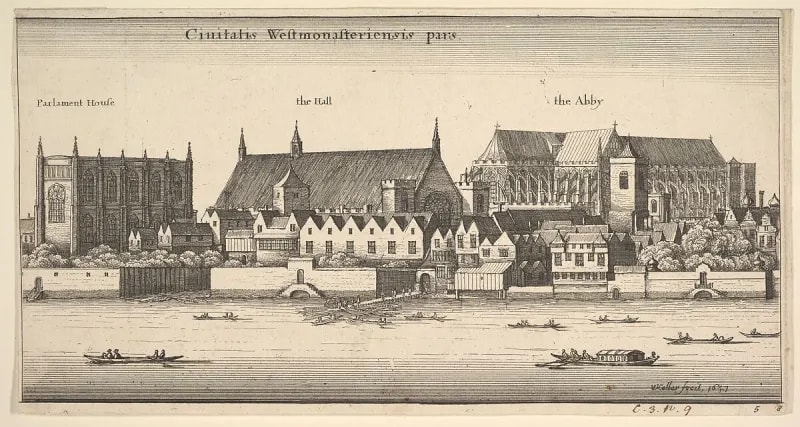
The Palace of Westminster is far older than it looks today. A royal residence began developing on the site as early as the reign of King Cnut in the early eleventh century, with major building work linked to Edward the Confessor, who built a royal palace here so he could oversee the construction of Westminster Abbey.
One of the most famous surviving parts of the early palace is Westminster Hall, first built in the late eleventh century during the reign of William II. For centuries, Westminster served as the main royal residence. That changed in 1512, when a fire destroyed the royal apartments and the monarch moved to Whitehall. Parliament, however, stayed.
How Westminster Shifted from Royal Home to Political Centre
Parliament began meeting at Westminster from the thirteenth century. Over time, the practical advantages of the location took over. It was close to the courts of law, to the treasury, and to the heart of London's power networks. By the 1200s, key government functions were increasingly rooted here, and Westminster evolved into the political centre we recognise today.
The Great Fire of 1834
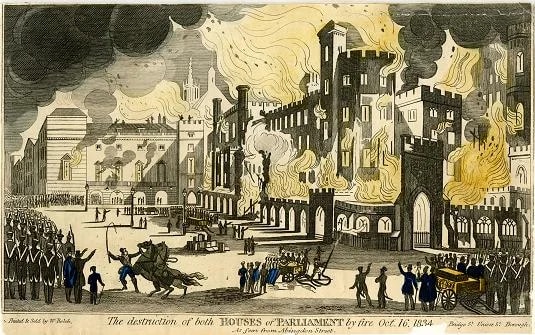
One of the most dramatic chapters in the history of the Houses of Parliament happened on 16 October 1834, when fire tore through the Palace of Westminster and destroyed much of the complex.
The cause is almost unbelievable. Officials needed to dispose of old wooden tally sticks used in an outdated accounting system. They were burned in stoves beneath the House of Lords, and the fire spread rapidly through the building. Huge crowds gathered on the riverbanks to watch, and artists captured the blaze — one of the most famous fires in London between the Great Fire of 1666 and the Blitz. Crucially, Westminster Hall survived, along with a few other elements, and those survivors were incorporated into the new palace.
Turner and Constable both painted the fire from opposite sides of the river. Turner's version — The Burning of the Houses of Lords and Commons — captures the scale of the spectacle that Londoners watched from the banks of the Thames.
Why the Houses of Parliament Look the Way They Do
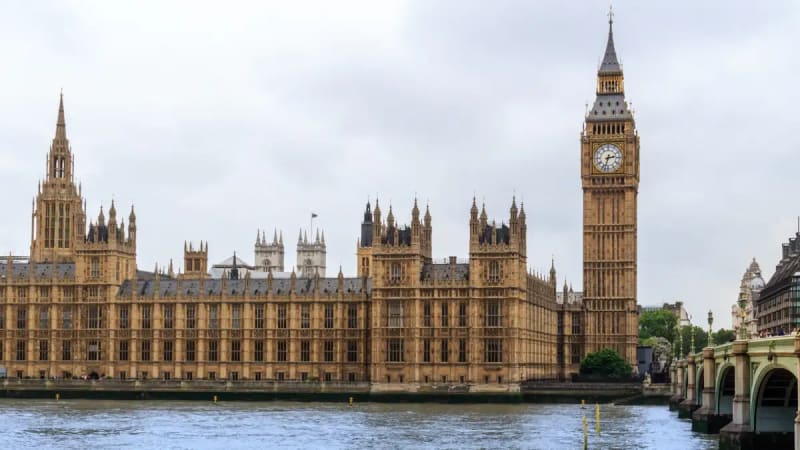
After the fire, a design competition was held for a new Parliament. Architect Charles Barry won, choosing the Gothic Revival style that defines the building today. He worked closely with Augustus Pugin, who was responsible for much of the decorative detail that gives the palace its distinctive character. Construction began in 1840 and continued for decades. The Gothic Revival style connected modern institutions with a sense of historical continuity — Victorian Britain placed enormous value on architectural symbolism, and Parliament was built to reflect that.
Big Ben vs Elizabeth Tower
Big Ben is the bell, not the tower. The tower itself is called the Elizabeth Tower. The great bell became known as Big Ben, commonly linked to Sir Benjamin Hall, who oversaw its installation. The tower was officially renamed the Elizabeth Tower in 2012 to mark Queen Elizabeth II's Diamond Jubilee.
Westminster Hall: the Oldest Part of Parliament
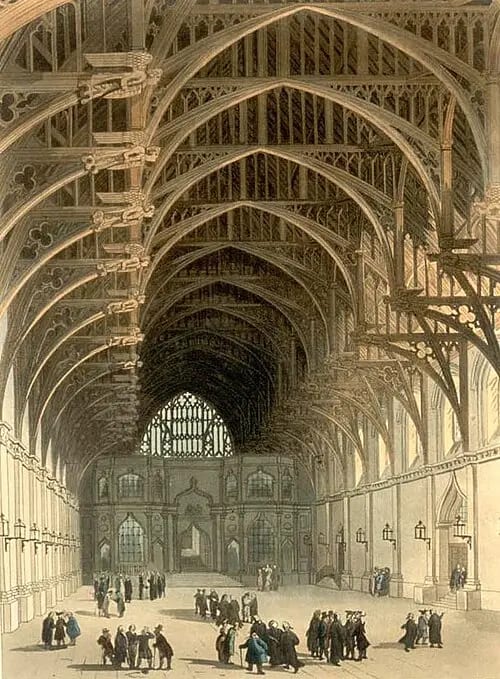
Westminster Hall is the oldest surviving part of the Palace of Westminster and one of the most impressive medieval spaces in London. Built in the eleventh century and later remodelled, it has witnessed royal ceremonies, historic trials, and moments of national significance. Walking into Westminster Hall is one of the rare London moments where history feels heavy in the room.
Westminster Hall has witnessed the trials of William Wallace, Thomas More, and Charles I. It is free to enter when Parliament is in session — one of the most historically significant rooms in Britain, and most visitors walk straight past.
How to Visit the Houses of Parliament
The Houses of Parliament are not a museum. They are a working building, with debates, committees, and daily political life happening continuously.
You can watch debates in the House of Commons or House of Lords for free from the public galleries. The galleries are generally open Monday to Thursday, and sometimes Fridays, but exact times vary. This is one of the best free experiences in Westminster — seeing British politics in action from the same room where it happens. Beyond the public galleries, there are also guided tours of the historic areas of the Palace. For current options and timings, check the official Parliament website.
The best time to attend is during Prime Minister's Questions, which takes place most Wednesdays when Parliament is sitting. Queue at the St Stephen's Entrance early — it fills up fast, especially during controversial political moments.
The Houses of Parliament and Westminster
Parliament makes more sense when you see it as part of the bigger Westminster story. Within a short walk you will find Westminster Abbey, where coronations have taken place for centuries, Parliament Square with its history of protest and debate, Whitehall housing key government departments, and Buckingham Palace as the ceremonial face of the monarchy.
If you want to understand how all of these places connect, our History of Westminster guide covers the full story. And if you are planning a visit, the Best Things to See in Westminster guide helps you prioritise.
The best way to experience the Houses of Parliament is not as a single photo stop, but as part of a wider Westminster walk. When you combine Parliament, Westminster Abbey, and the royal route towards Buckingham Palace, the area starts to feel like one connected story. Join our free Westminster walking tour to see it with context and local insight.

