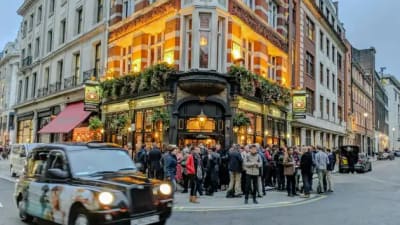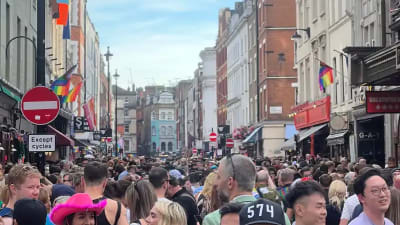
Soho is one of the most-visited neighbourhoods in London. It is also one of the most seen and least understood. The crowds on Old Compton Street and Carnaby Street are real, but they stop at the obvious surfaces. Most visitors do not know about the ceramic noses hidden on the walls, the 1870s French patisserie that Alexander McQueen used to use as his personal kitchen, or the courthouse where Oscar Wilde was first charged and Mick Jagger was subsequently tried.
This guide covers eight hidden gems in Soho that repay looking for. Some require nothing more than knowing where to look. Others require a small detour from the standard tourist routes. All of them are better than the queue for the same brunch place on Dean Street.
If you want a guided version, our Free Soho Walking Tour covers several of these and adds the context that makes them make sense.
The Seven Noses of Soho
In 1997, an artist named Rick Buckley attached seven ceramic noses to the walls of buildings across Soho as a protest against the proliferation of CCTV cameras. The noses are small, human-scale, and set at about head height on walls that people walk past every day without looking up. The locations were never officially announced. Finding them became a minor local puzzle.
The confirmed locations include Bateman Street, Dean Street, Great Windmill Street, and Endell Street. Several others have been reported but remain disputed. The story attached to them, that whoever finds all seven will live forever, was invented by Buckley to give the project a mythology it didn't originally have. It stuck.
This is probably the best entry point into the hidden gems of Soho because it requires nothing except walking the streets with your eyes at wall height rather than pavement height.
Great Marlborough Street Magistrates' Court
The building on Great Marlborough Street that is now the Courthouse Hotel was for most of its history one of London's magistrates' courts. The court itself was unremarkable in design. The list of people who appeared before it is not.
Oscar Wilde was first charged here in 1895. Mick Jagger appeared here in 1969. Keith Richards in 1973. Johnny Rotten in 1977. John Lennon was tried here in 1970 for cannabis possession and fined £150. The courtroom where these proceedings happened still exists inside the hotel and can be seen by asking at the front desk.
This is not a building that announces itself as historically significant. The hotel branding obscures the function. But walking past knowing what happened in the room behind those windows is one of the better hidden gems in Soho for anyone interested in twentieth-century cultural history.
Maison Bertaux
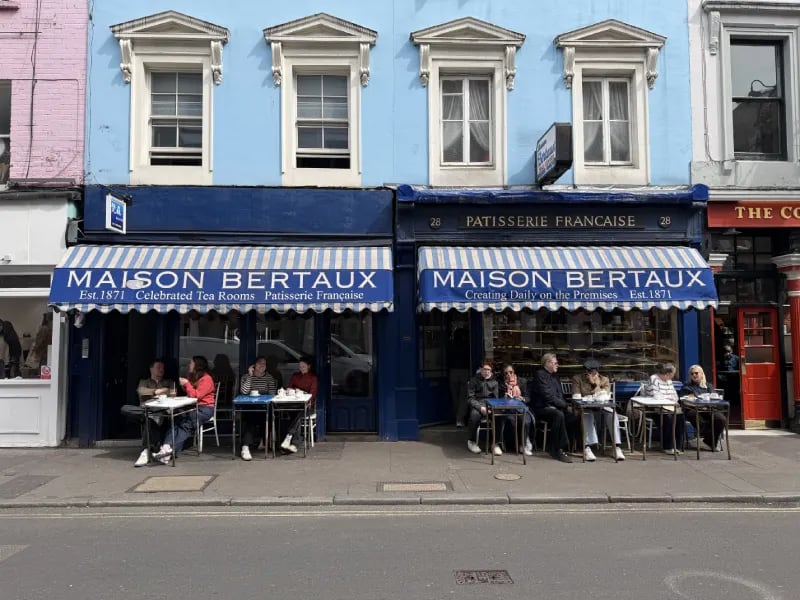
Maison Bertaux on Greek Street was founded in 1871 and is the oldest patisserie in London. It has been run since 1971 by Michele Wade, who took it on and did not change very much, which is precisely the point. The interior looks the way it looked fifty years ago. The cakes are made on the premises. The service is eccentric in a way that has nothing to do with performance.
Alexander McQueen used it as his personal kitchen. Lily Allen came here for birthday cakes. Virginia Woolf wrote about it. Karl Marx, who lived three streets away on Dean Street, was almost certainly a customer. Grayson Perry has been a regular. The list of people who have passed through a room this small is improbable.
The hidden gem quality here is that it looks exactly like a patisserie from the outside. Most people do not go in.
Algerian Coffee Stores
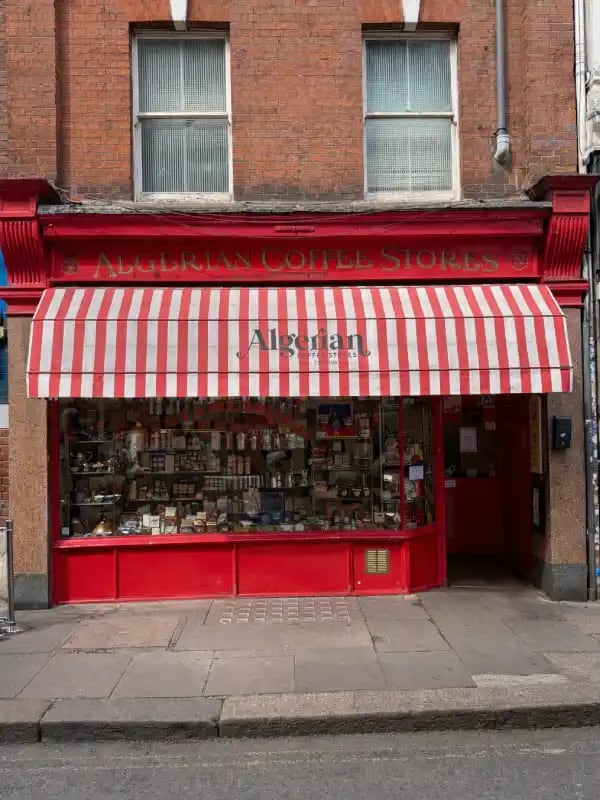
The Algerian Coffee Stores on Old Compton Street has been selling coffee and tea since 1887. The shop was founded by a Mr Hassan, who had recently arrived in London, and it has been on the same site ever since. It survived the Blitz, two world wars, and the complete transformation of the neighbourhood around it.
The interior is full of sacks and tins and the smell is very good. They stock a range of coffees and teas that most London shops do not carry. It is one of the hidden gems in Soho that hides in plain sight: the shop is not particularly obscure, but it sits on a street where most visitors are looking at restaurant menus or deciding between bars, not noticing that the shop in front of them has been there since Victoria was on the throne.
Mozart on Frith Street
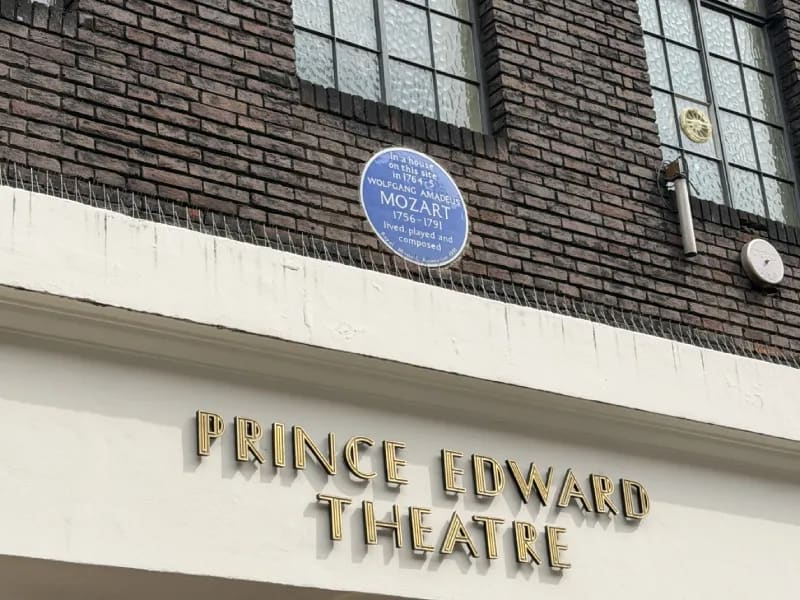
Leopold Mozart brought his children to London in 1764 to demonstrate their musical gifts to the English public. Wolfgang Amadeus was eight years old. The family lodged at 20 Frith Street, Soho, and stayed for approximately fifteen months. During this time, the young Mozart composed his first symphony, Symphony No. 1 in E flat major.
A blue plaque marks the building. It is a routine piece of Soho streetscape that most people walk past. The fact that Symphony No. 1 was written in a Soho lodging house is genuinely worth stopping for.
Golden Square
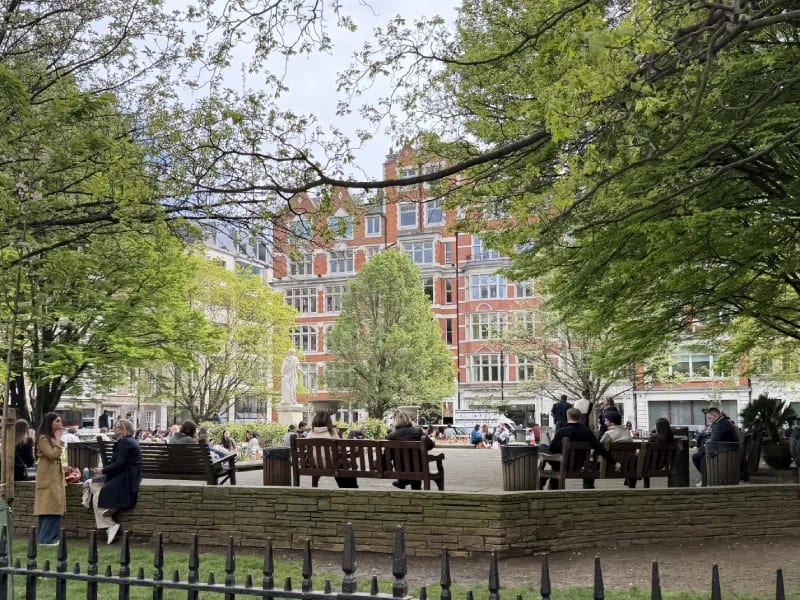
Golden Square sits one block west of Regent Street and is almost entirely unknown to visitors. It was laid out in the 1670s on land that was part of the original Soho development and has a statue of George II in the centre that has been there since 1753. It is a proper London garden square, smaller than Soho Square and with considerably fewer tourists.
This is one of the more straightforwardly restful hidden gems in Soho: a square with benches and trees where you can eat lunch without anyone trying to sell you a tour. The building that now faces it on the north side housed a pharmaceutical company for most of the twentieth century. Dickens set a scene from Nicholas Nickleby here. The combination of Georgian history, real quiet, and utter invisibility to the tourist circuit makes it worth knowing.
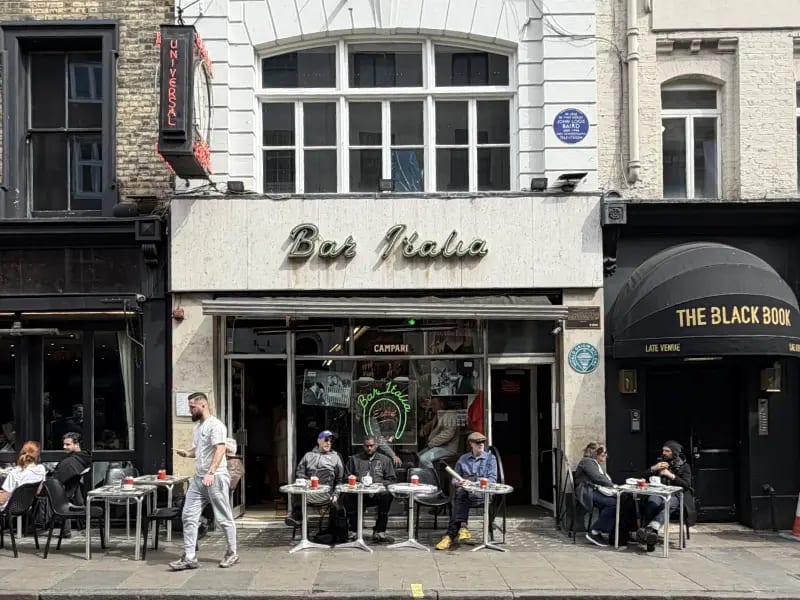
Bar Italia
Bar Italia is not exactly hidden. Pulp wrote a song about it. But its hours make it function as a hidden gem for most visitors, who are asleep by the time it becomes itself. The café on Frith Street has been open since 1949 and closes at 5am, seven days a week. It was founded by Lou and Caterina Polledri and has been run by the same family across three generations.
The interior is unchanged: a Gaggia espresso machine, photographs of Italian football players and boxers, a television that shows Italian sport when Italian sport is happening. When Italy won the World Cup in 2006, the street outside filled with thousands of people. In the early hours on a Friday or Saturday, Bar Italia is where the neighbourhood ends up: musicians, cooks, people leaving clubs, people who have nowhere else to be and do not want to be anywhere else.
Go after midnight. That is when it makes sense.
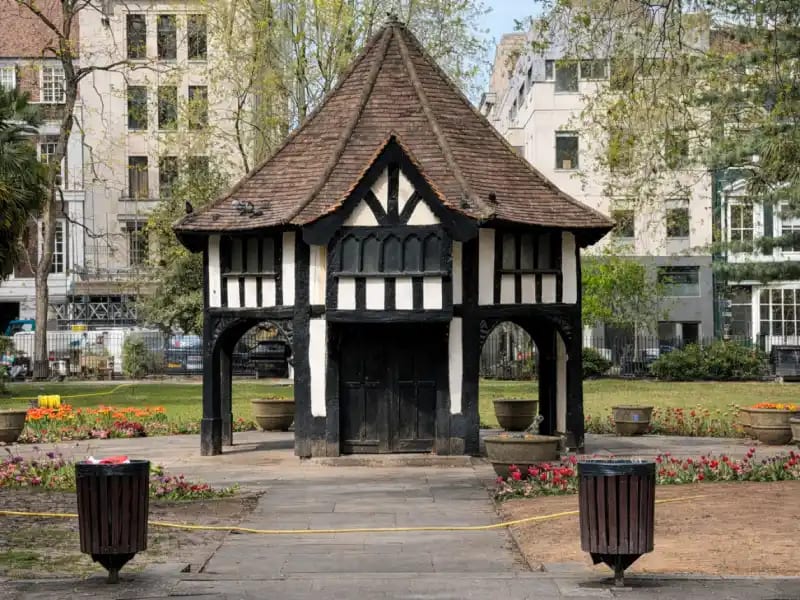
The Tudor Shed in Soho Square
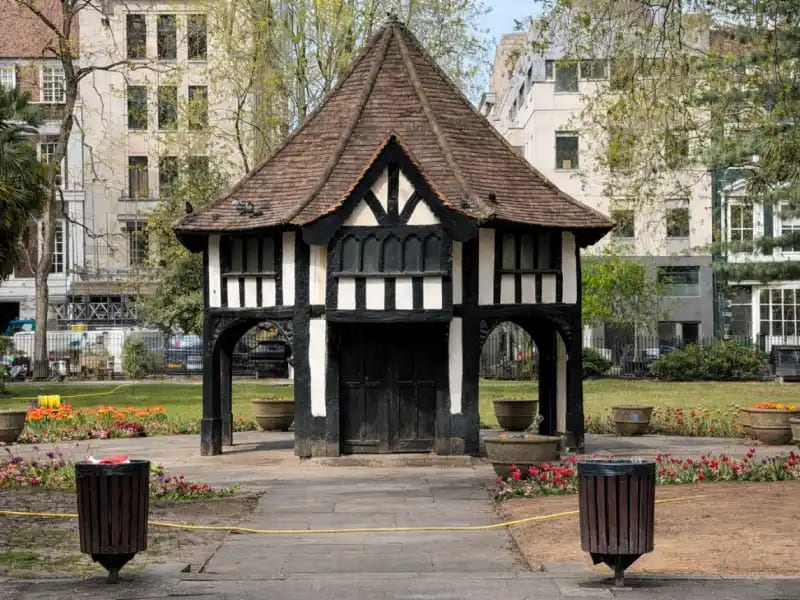
Soho Square has a small timber-framed building in the centre that looks like a late-medieval or Tudor garden shed. This is entirely deliberate. The building was constructed in the Victorian era to look old, which is a very Victorian thing to do, and was used for decades as a groundskeeper's storage shed. The underground space below it served as an air raid shelter during the Second World War.
It now functions as an electricity substation. The structure above it is a folly: a fake old building built to hide modern infrastructure. This makes it two hidden gems in Soho simultaneously — one for the architectural deception and one for the air raid shelter that most people have no idea exists beneath the square where they are eating their sandwich.
For more on Soho's layered history, our Soho history guide covers the neighbourhood from its origins as a royal hunting ground through to the present day. And if you want to explore the broader neighbourhood, the Soho London neighbourhood guide has the practical detail.
Probably Golden Square. It is one block from Regent Street and almost entirely invisible to visitors, despite being a genuinely beautiful Georgian garden square with a 1753 statue at its centre.
Walk the streets with your eyes at wall height rather than pavement height. Confirmed locations include Bateman Street, Dean Street, Great Windmill Street, and Endell Street. They are small, ceramic, and human-scale. You will recognise them immediately if you are looking.
The courtroom where Wilde, Jagger, and Lennon appeared is inside the hotel and visible by arrangement with the front desk. It is a working hotel, so access is not guaranteed, but the request is a standard one and usually accommodated.
Yes. It is the oldest patisserie in London, founded in 1871, and has barely changed in living memory. The cakes are made on the premises. It is not cheap but it is not expensive. Go in, order something, and notice the room.
Walk slowly and look at walls. Most of what Soho contains is at eye level or slightly above. A guided walk helps: our Free Walking Tour of London covers several of these locations with the history and context that makes them make sense.