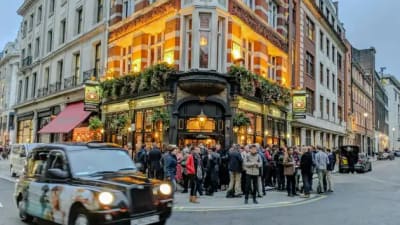
Walk through Soho at night and something shifts. The coffee shops shutter, the tourists thin out, and the neighbourhood stops performing. What's left is the real thing: neon on wet cobblestones, doors opening onto noise and warmth, a square mile that has been doing this, reliably, for the better part of three centuries.
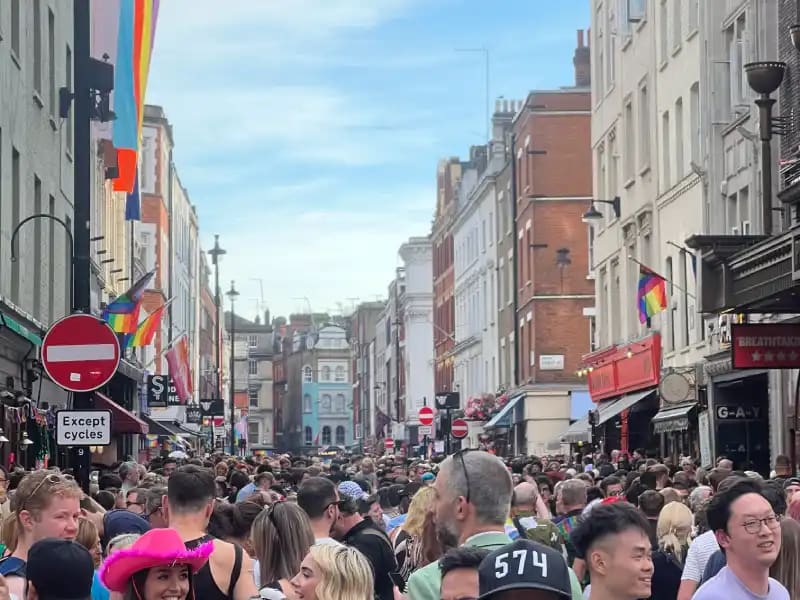
No other part of London concentrates this much into this little space. Pubs where Orwell drank. Jazz clubs that have run without interruption since 1959. Gay bars that stood their ground through things no bar should have to stand through. Speakeasies down staircases with no sign on the door. Bar Italia at 2am, because there is nowhere else quite like it anywhere.
This guide covers what Soho at night actually is, not the version on every other list. That means honest picks, a few things to skip, and the history you need to understand why this neighbourhood feels different after dark. If you want the full story of how Soho became what it is, our Soho History: From Georgian Vice to Creative Hub covers that in detail.
How Soho Changes After Dark
During the day, Soho belongs to everyone. Media offices, film production companies, coffee shops full of laptops. By early evening, the pavements outside the pubs start filling. By nine o'clock, the transformation is complete.
The crowd shifts too. The office workers have gone home or moved deeper into the pubs. The theatre crowd spills out of Shaftesbury Avenue around ten. Later still, it's the people who live here, who have always lived here. The ones who know which bar has the corner table, which kitchen stays open past midnight, which door to knock on.
Soho at night is not Shoreditch. It is not a scene. It does not have a particular aesthetic or a dress code or a moment. What it has is layers. You can have one of the best pints in London in a Victorian pub and walk three minutes to a cocktail bar that doesn't exist on Google Maps. That density, and the fact that it is all walkable, is the thing no other part of the city quite replicates.
The streets worth knowing after dark when you're out in Soho at night: Dean Street runs through the middle of it, pubs and restaurants stacked either side. Frith Street is quieter, better for it. Old Compton Street is the one that stays loudest longest. Greek Street has some of the most interesting doors to walk through.
The Pubs Worth Your Time
Soho at night has no shortage of pubs, and a fair few of them are fine without being worth a detour. Three are worth going out of your way for.
The French House on Dean Street is the one people mean when they say Soho has a soul. It has been here since 1891. During the Second World War it was Charles de Gaulle's base in London. Francis Bacon drank here regularly. The rules have not changed: beer is served in halves only, screens are banned, and taking a reserved bar stool is the act of someone who hasn't been before. The regulars have been coming for decades and will politely make this clear. Go anyway. Order wine, find a corner, and stay as long as they'll let you.
The Dog and Duck on Bateman Street is the other one with real history behind it. Built on the site of the Duke of Monmouth's home, the current Victorian building dates to 1897. George Orwell celebrated here when Animal Farm was picked up by an American publisher. The interior has barely changed: glazed tiles, mahogany panelling, a mosaic of a dog and duck set into the entrance floor. It is a proper pub in the way that matters, without being precious about it.
The Blue Posts on Berwick Street is different from both of them. Louder, younger, a favourite of the area's designers and creatives. It sits in the middle of the old Berwick Street market strip, and on a Friday evening the pavement outside fills up early. It is the kind of pub that becomes the whole plan for Soho at night rather than just the warm-up.
If those three are full, the Coach and Horses on Greek Street is the honest fallback for a night in Soho at night: rough around the edges, vegan menu, and a long history as the haunt of local journalists and Soho characters going back decades.
Bars: Hidden and Otherwise
The best bars in Soho at night tend not to advertise themselves.
Cahoots is the one that's easiest to explain to someone who hasn't been: a 1940s underground station, recreated in the basement of Kingly Court, complete with rationed cocktails, wartime ephemera, and the kind of camp theatricality that should be exhausting but somehow isn't. Book ahead. It fills up.
Disrepute, on Kingly Street, is the opposite. No theme, no concept, just a well-designed mid-century speakeasy that takes its drinks seriously. It has a members-only element but is open to non-members with a booking. The cocktails are good enough that it would be busy regardless of the mystique.
The Vault is harder to find. It sits behind the whisky bar Milroys on Greek Street, down a staircase, through a narrow doorway. A handful of tables in an underground room with a full cocktail list. If you are in a group of more than two, book. Walk-ins without reservations regularly get turned away.
Old Compton Street and the LGBTQ+ Scene
Old Compton Street is where Soho's identity sits, and nowhere is that more obvious than Soho at night. It has been the centre of London's LGBTQ+ community since the 1980s, and it remains the loudest, most alive stretch of pavement in the neighbourhood after dark.
The Yard on Rupert Street is the insider pick. A Victorian courtyard bar, properly outside, with a warmth that is hard to replicate. It pulls a mixed crowd without trying to, which is rarer than it sounds. If you only go to one bar on this stretch, make it this one.
Comptons has been on Old Compton Street since the mid-eighties. It still feels like a pub rather than a club, which is part of why it has lasted. Real ale, wood panelling, and a doorman who gently redirects confused pre-theatre couples looking for a G&T. It is entirely itself.
The Admiral Duncan, further along Old Compton Street, is the one with the weight of history behind it. It has been trading since at least 1832. On 30 April 1999, a neo-Nazi named David Copeland detonated a nail bomb inside the pub. Three people were killed: Andrea Dykes, who was 27 and pregnant, her friend John Light, and Nick Moore. Seventy-nine more were injured. It was the third of three bombs in two weeks, the others targeting the Black community in Brixton and the Bengali community in Brick Lane. Copeland was charged with murder two days later.
The Admiral Duncan reopened nine weeks after the attack and has not closed since. The bombing became a turning point in the relationship between London's LGBTQ+ community and the Metropolitan Police, who were praised for how they handled the aftermath. Every year on 30 April there is a vigil outside. Walking past and not knowing any of this is possible. Walking past knowing it feels different.
Live Music After Dark
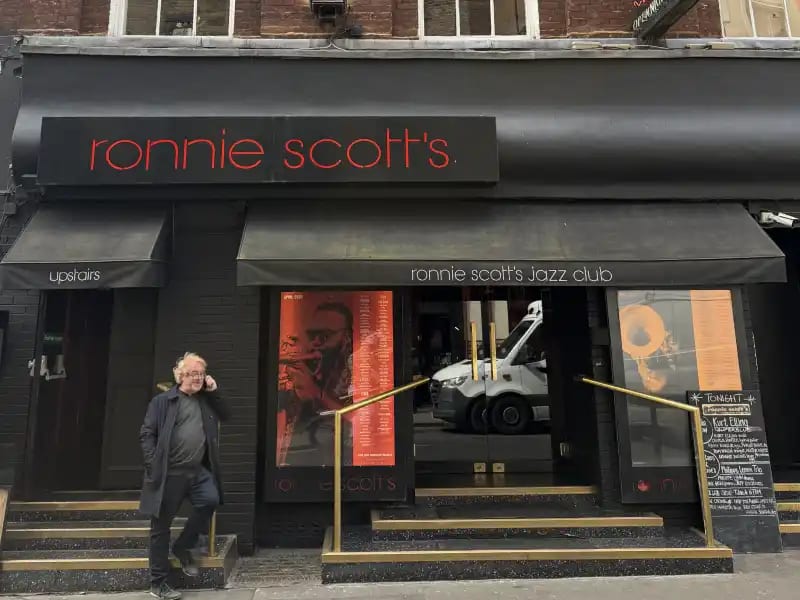
Ronnie Scott's on Frith Street opened in 1959 and has not missed a beat. It is one of the best jazz clubs in the world, which is easy to say and in this case also true. The room is intimate, the acoustics are genuinely good, and the Late Late Show after midnight is worth staying for even if the headline act is not a name you recognise. Book in advance. It sells out regularly.
Ain't Nothin' But on Kingly Street is the alternative if Ronnie's is out of budget or fully booked. Blues and soul, live every night, no corporate polish. The kind of place where strangers end up singing together without it feeling forced. It is one of the most underrated spots for live music in Soho at night, and the guides that overlook it have kept it exactly as it should be.
The 100 Club on Oxford Street, just north of Soho's border, is worth knowing about too. It has been running since 1942. The Sex Pistols played here. So did the Rolling Stones. The room has not changed much and the nights vary, so check the programme, but if something is on you want to see, the basement room is one of the best in London.
Late-Night Food
Most of central London closes its kitchens at ten. Soho at night is the exception.
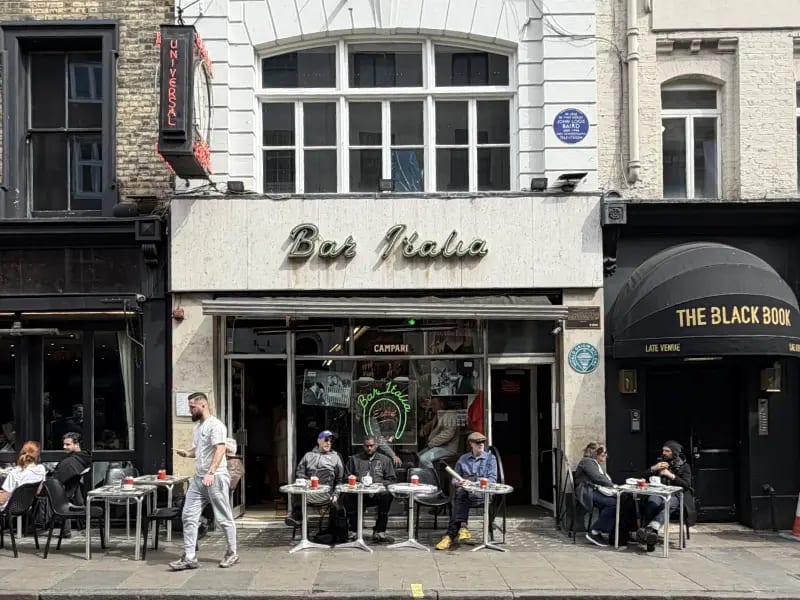
Bar Italia on Frith Street has been open since 1949 and closes at 5am. It is the place the whole neighbourhood ends up, eventually. Italian football fans, post-club crowds, musicians after a show, people who just want an espresso and a panini at 2am without anyone making it weird. When Italy won the World Cup in 2006, more than 5,000 people gathered outside. The family has run it since the beginning. It is not doing anything complicated, which is exactly why it works.
Balans on Old Compton Street stays open until 5am on weekdays and 6am on weekends. A brasserie rather than a bar, with actual tables and a proper menu. Burgers, breakfast, cocktails. It has been on this strip long enough to count as part of the furniture, and it fills up in that specific late-night way where nobody is in a hurry to be anywhere else.
If you want something quick and cheap, Maoz on Old Compton Street does falafel until late. Build-your-own, fresh, no frills. The queue moves fast.
What Soho at Night Isn't (And What to Skip)
Knowing what to skip is as useful as knowing where to go, especially when planning Soho at night for the first time.
Pedicabs. Avoid them entirely. They cluster around Shaftesbury Avenue and the edges of Soho, and they are not regulated in any meaningful way. The driver can charge whatever they decide to charge at the end of the journey. Tourists find this out too late. Walk or get a black cab.
The bars immediately around Piccadilly Circus bleed into the western edge of Soho and are a different thing entirely. Loud, expensive, aimed squarely at people who don't know better. They look like Soho but they are not. Walking two minutes north or east makes a significant difference.
The sex industry that defined parts of Soho for most of the twentieth century is largely gone. A handful of licensed shops remain on Brewer Street, but anyone arriving expecting the old reputation will find it doesn't exist in that form anymore. The neighbourhood moved on. This is neither a loss nor a triumph, just a fact. For a fuller picture of what Soho actually is today, the complete neighbourhood guide is the place to start.
Soho Theatre on Dean Street is not a tourist trap at all. It's excellent and worth a night of its own. The trap is assuming that because you are in the West End, the nearest theatre is the right one. The Soho Theatre does new writing, comedy and cabaret that the big Shaftesbury Avenue houses don't. Check the programme before defaulting to a musical.
Getting There and Getting Home
Getting to and from Soho at night is straightforward. Soho sits within walking distance of four tube stations: Tottenham Court Road, Oxford Circus, Leicester Square and Piccadilly Circus. The Underground stops around midnight depending on the line, but the Elizabeth line and Night Tube run later on Fridays and Saturdays.
Night buses are frequent and reliable if you miss the last train. The 24-hour bus routes through central London cover most of where you'd want to go.
If you're sharing a cab home, use a black cab or a licensed minicab through an app. Do not get into an unlicensed vehicle on the street, and do not let a pedicab take you anywhere.
Final London Insiders Tip
The best way to do Soho at night is to already know it during the day. The neighbourhood rewards familiarity, knowing which alley cuts through to Frith Street, which pub has the quieter room at the back, which door looks like nothing and leads somewhere worth finding. If you want to get that feel before the evening starts, join our Soho Free Walking Tour. It runs weekly, it's free, and it covers the history, the characters and the corners of this neighbourhood that most people walk straight past.
Soho is one of the most heavily policed areas in London and is generally safe. As with any busy city centre at night, keep an eye on your belongings in crowds, stick to well-lit streets if you're moving between venues, and trust your instincts if something feels off. The main streets, Old Compton Street, Dean Street and Frith Street, are busy until late.
The pubs start filling from around 5pm with the after-work crowd. The atmosphere peaks between 9pm and midnight. After that, the bars that stay open thin out the crowd, but Old Compton Street and the area around Bar Italia stay lively until the early hours.
For hidden bars, Disrepute on Kingly Street and The Vault behind Milroys on Greek Street are the picks. For something with a bit more theatre, Cahoots in Kingly Court. For the LGBTQ+ scene, The Yard on Rupert Street is the insider favourite.
Bar Italia on Frith Street is open until 5am and is worth going for the atmosphere alone. Balans on Old Compton Street serves a full menu until 5 or 6am depending on the night. Maoz on Old Compton Street does falafel until late if you want something fast and cheap.
Yes. Ronnie Scott's sells out regularly, particularly at weekends. Book online before you go. The Late Late Show after midnight sometimes has more availability than the main set.
Yes. Old Compton Street and the streets around it have been the centre of London's LGBTQ+ community since the 1980s. The bars on and around Old Compton Street, including Comptons, The Yard and The Admiral Duncan, are some of the most established LGBTQ+ venues in the city.